Something to Write About: The Author
Play Something to Write About: The Author
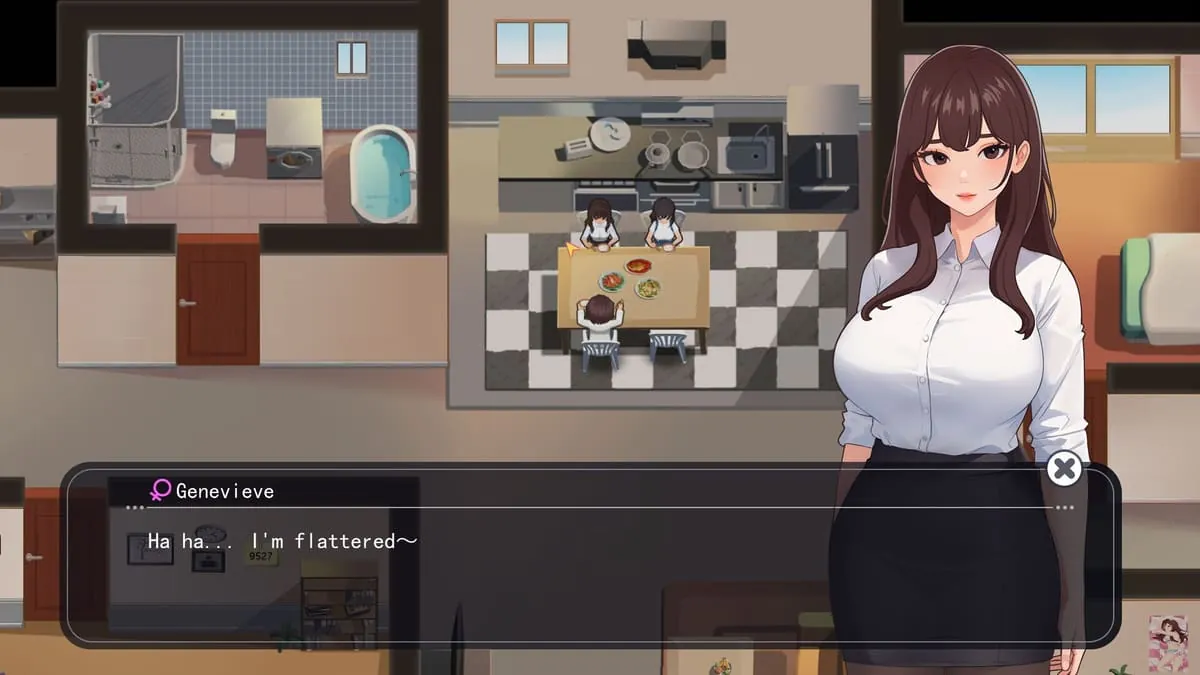
Something to Write About: The Author Screenshots






Something to Write About: The Author review
Explore gameplay mechanics, narrative depth, and character interactions in this acclaimed visual novel
Something to Write About: The Author stands out as a narrative-driven visual novel that combines creative storytelling with meaningful character development. Released in March 2021 and currently at Chapter 7.1, this game has earned recognition for its sophisticated writing and complex themes. Players take on the role of a young bestselling author struggling with trauma and creative block, who accepts a teaching position in Los Angeles. The game’s strength lies not in power fantasy scenarios, but in authentic character relationships and consequential decision-making. With six compelling female characters, multiple endings, and over 1,150 renders in the latest chapter, Something to Write About: The Author offers depth that appeals to players prioritizing narrative quality over other elements.
Understanding the Core Gameplay and Mechanics
Ever feel like you’re just going through the motions in a game? You click the obvious “good” choice, get a predictable smile from a character, and move on, knowing your decision didn’t really matter in the grand scheme of things. 😐 I’ve been there, and it leaves you feeling more like a spectator than a participant in the story. That’s exactly why Something to Write About: The Author hit me like a revelation. This isn’t a game about winning hearts through a series of flattering compliments; it’s a delicate, often challenging simulation of human connection where every word you say has weight. 🤝
You step into the worn-out shoes of a once-celebrated author, now utterly blocked and haunted by personal tragedy. A teaching job in Los Angeles isn’t just a new job—it’s a desperate lifeline, a last-ditch attempt to reconnect with the world. The core premise is your journey: can you heal yourself by helping others find their voices? This central question powers every interaction and defines the unique Something to Write About gameplay mechanics. Forget quick-time events or complex mini-games; your primary tool here is empathy, and your keyboard (or mouse) is the conduit for your conscience.
Built on the accessible Ren’py narrative game progression engine, the game strips away unnecessary clutter to focus purely on the narrative and your role within it. Ren’py’s strength is in its simplicity, allowing the writing and character art to take center stage, making your choices feel immediate and personal. This guide will dive deep into the systems that make this visual novel so compelling, from how you build trust to how a single offhand comment can echo into one of nine completely different futures. Let’s unpack the engine under the hood. 🔧
How the Story Progression System Works
At first glance, the Something to Write About gameplay mechanics might seem familiar: read text, make a choice, see what happens. But the devil—and the genius—is in the details. The game is structured around your daily life as a professor and writer. You don’t have a traditional “stamina” bar or “action points.” Instead, your resources are time, emotional energy, and attention.
Each day, you might have opportunities to work on your own novel (a personal meter of your healing), prepare for classes (affecting your students’ progress), or spend time with the people around you. Choosing to focus on one area often means neglecting another. This creates a beautiful tension. Do you stay late to give detailed feedback on a struggling student’s manuscript, potentially helping them but exhausting yourself? Or do you protect your own fragile creative energy for your own work?
The game constantly asks: Are you pouring from a full cup, or are you running on empty? Your capacity to be present for others is directly tied to how well you are caring for yourself.
This system is a brilliant reflection of the protagonist’s internal struggle. Your progression isn’t measured in experience points but in narrative milestones: completing a chapter of your book, witnessing a student have a breakthrough, or deepening a personal relationship. The Ren’py narrative game progression handles this seamlessly, tracking a web of variables behind the scenes that represent your relationships, your personal growth, and the state of the world around you. You won’t see a numerical “affection” score hovering over a character’s head (which I personally love—it feels more authentic). Instead, you gauge your connection through the subtleties of their dialogue, their willingness to open up, and the new options that become available to you.
It’s a system that rewards patience and observation. Rushing to “solve” a character’s problems will often backfire. True progression comes from listening, offering support when it’s asked for (and sometimes when it’s not), and recognizing that healing isn’t linear—for you or for anyone else. This respectful, nuanced approach is what sets the Something to Write About gameplay mechanics apart from most dating sims or visual novels.
Character Interaction and Relationship Building
Here’s where the heart of the game truly beats. 🫀 You’ll meet six women, each a student or colleague, each carrying their own unique dreams, fears, and burdens. The game explicitly moves away from power fantasy. These aren’t archetypes waiting to be “won”; they are fully realized people whose paths intersect with yours. The visual novel relationship system in Something to Write About: The Author is less about romance and more about resonance.
Building a relationship is a slow, fragile process. It starts in the classroom, continues in your office hours, and might evolve into conversations at a café or messages late at night. Every interaction is a chance to either build trust or create distance. You might:
* Offer constructive critique on a story.
* Share a personal anecdote from your own writing career.
* Choose to respect a boundary when someone is clearly not ready to talk.
* Simply listen without offering a solution.
The Something to Write About character relationships are dynamic. A character having a bad day might be short with you, regardless of your previous rapport. Someone else might surprise you with a moment of vulnerability when you least expect it. The system understands that relationships are contextual and mood-dependent.
To give you a clearer picture of who you’ll be connecting with, here’s a breakdown of the core characters and how your choices weave into their lives:
| Character | Primary Traits & Arc | How Player Choices Shape the Relationship |
|---|---|---|
| Jane | The overachiever with paralyzing perfectionism. Fears failure above all else. | Choices involve pushing her to take creative risks vs. supporting her meticulous process. Encouraging her to be imperfect can lead to breakthroughs or increased anxiety. |
| Chloe | Seemingly cynical and guarded, uses sarcasm as a shield for deep-seated vulnerability. | Deciding to see past her abrasive exterior is key. Calling out her deflection with kindness, rather than matching her sarcasm, slowly builds genuine trust. |
| Maya | Bubbly and optimistic on the surface, but struggles with validating her own artistic voice. | Your choices can either reinforce her need for external approval or help her find confidence in her own unique perspective. It’s about building her up, not just praising her. |
| Professor Reed | A sharp, seasoned colleague. Represents a potential future path—jaded or fulfilled. | Interactions can be purely professional, competitive, or evolve into a mentorship/friendship. Your choices define what kind of professional you want to become. |
| Kat | Impulsive and passionate, often leaps before she looks, leading to messy but honest creations. | You can try to temper her impulsivity or encourage her raw passion. Choices here affect whether she channels her energy or burns out. |
| Rachel | Quiet and observant, expresses herself more through art and action than words. | This relationship grows in silent moments and shared creative space. Pushing for verbal communication can shut it down; appreciating her non-verbal cues deepens the bond. |
This visual novel relationship system forces you to consider how you help, not just if you help. What works for Jane will likely overwhelm Rachel. The “consequences” aren’t just about locking or unlocking romance paths; they’re about fundamentally influencing the trajectory of another person’s life and art, which in turn, reflects back on your own recovery. It’s a profound feedback loop that makes every conversation feel significant.
Decision-Making and Consequence System
This is the masterpiece of the game’s design. In Something to Write About: The Author, there are very few “right” answers, but there are countless meaningful ones. The character interaction choices consequences are rarely immediate. The game employs a “butterfly effect” narrative design, where a small, seemingly innocuous choice in Chapter 2 can dramatically alter the landscape of your relationships in Chapter 7.
The decision-making impact story philosophy is absolute. Choices are not cosmetic. Telling a character you’re “too busy” to talk isn’t just a missed scene; it’s a signal that you are not a reliable source of support. They will remember, and it will change how they interact with you later, potentially closing off entire story branches. Conversely, remembering a small detail they shared weeks ago and asking about it can open a door you never knew was there.
Real Example of Branching Consequences:
Let’s take an early interaction with Jane, the perfectionist. In a first meeting, she shows you a draft that is technically flawless but emotionally sterile.
* Choice A (Praise the Craft): You focus on her excellent structure and grammar. This validates her safe approach. She feels relieved but unchallenged. Consequence: Her subsequent work remains technically sound but risk-averse. Her personal arc may stagnate, and she may never confront her fear of emotional exposure. In the long term (Chapter 7.1), this could lead to an ending where she becomes a successful but unfulfilled technical writer, and your relationship remains cordial but distant.
* Choice B (Challenge the Heart): You acknowledge the skill but gently ask, “What is this story really about for you? I’m not feeling it yet.” This risks upsetting her. Consequence: She might be defensive or withdrawn in the next encounter. However, you’ve planted a seed. If you continue to provide a safe space for imperfection, she may later attempt a raw, personal story. This could trigger her major character arc. In Chapter 7.1, this path could lead to an ending where she publishes a critically acclaimed, vulnerable novel, and you share a deep, mutual understanding as artists.
This is the essence of the character interaction choices consequences. You’re not choosing between “Good +5” and “Neutral +0.” You’re choosing between different kinds of futures. The game boasts 9 potential endings in its conclusive Chapter 7.1, and they are not simply variations on a theme. They represent fundamentally different outcomes for your protagonist and the people in his life. Will you find inspiration and write again? Will you find a deeper connection with one specific person? Will you help your students flourish, or will some fall by the wayside? Or will you retreat further into your shell?
Achieving these different multiple endings visual novel outcomes requires consistent behavior and values. The game is tracking your overall approach to life and relationships. Are you prioritizing your art above all? Are you sacrificing yourself for your students? Are you seeking a romantic connection, or focusing on platonic mentorship? The sum total of your micro-choices defines the macro-narrative.
This incredible depth of decision-making impact story is what makes replaying the game so rewarding. It’s not about loading a save to see the other dialogue option; it’s about starting a new journey with a different philosophy to see how an entirely new set of stories unfolds. You begin to see the invisible threads connecting every moment, and it transforms you from a player making choices into an author, in every sense of the word, co-writing these lives with your empathy and intention. ✍️
In the end, Something to Write About: The Author is more than a game about choices—it’s a thoughtful examination of how we affect one another. Its mechanics are designed not to challenge your reflexes, but to engage your heart and mind. By mastering its visual novel relationship system and understanding the long-term character interaction choices consequences, you don’t just unlock endings; you experience a story about recovery, impact, and the fragile, beautiful process of creating something—whether it’s a novel, a friendship, or a better version of yourself.
Something to Write About: The Author distinguishes itself through its commitment to meaningful storytelling and character-driven narrative. The game’s refusal to rely on power fantasy tropes, combined with its sophisticated handling of heavy topics and consequential decision-making, makes it a standout title for players seeking depth and authenticity. With nine potential endings, six richly developed characters, and ongoing development that has reached Chapter 7.1, the game continues to evolve and expand its narrative scope. Whether you’re drawn to visual novels for their storytelling potential or seeking an experience where your choices genuinely matter, Something to Write About: The Author delivers on both fronts. The game’s recognition for its writing quality among both adult and mainstream gaming communities speaks to its broad appeal beyond its genre classification. If you value narrative substance and character development in your gaming experience, this title deserves your attention.